
How to Get Out of a Reading Slump
Work out which kind of slump you're in, then use the fix that matches, including twelve books you can finish in a single evening.
Every reader hits a wall eventually. Books lose their pull, your attention scatters, and the novel on your nightstand gathers dust while you rewatch shows you've already seen. Slumps are normal, and they tend to end faster when you treat the cause rather than wait. Here's how to tell which of the four common slumps you're in, what fixes each one, and a list of short books you can finish tonight, because nothing ends a slump like finishing something.
Last reviewed
First, Work Out Which Slump You're In
Slumps have four common causes, and the fix depends on which you've got. A book slump means you're forcing your way through something that isn't working. A life slump means stress or exhaustion has used up the attention reading needs. A habit slump means your reading time was quietly replaced by something easier, usually your phone. And a goal slump means a reading target has turned every book into a reminder of how far behind you are.
A quick test: if you'd happily read a different book tonight, it's the book. If you don't want to read anything at all, it's life. If you'd like to read but somehow never start, it's the habit. If you'd like to read but every book feels like catching up, it's the goal. The sections below cover the fix for each.
Book Slump: Put It Down, or Change the Format
If one book is the problem, stop reading it. You can come back in a different season, or never. One unfinished book is a far smaller loss than three months spent avoiding all books because of it. Put it on a did-not-finish shelf so it's recorded and out of the way; Parch has one, and Goodreads added one in 2026.
Then pick something as different as possible. After heavy literary fiction, a fast thriller; after a fantasy series, narrative non-fiction. A hard switch of genre resets your expectations.
Sometimes it isn't the book but the format. A dense chapter that stalls you on the page can move easily as an audiobook, and a book that drifts in your ears can grip you in print. Try switching at the same point before you give up on it. In Parch one book can be print, ebook and audiobook at once, and each format keeps its own place, so switching costs nothing.
Life Slump: Go Short, Light or Familiar
When you're exhausted, the goal isn't literary growth; it's remembering that you like this. Short books help, because finishing something gives you momentum that being 15% into a 700-page epic never will. So do familiar ones: a reread of a comfort favorite removes every source of friction at once. And so do formats that ask less of you: a graphic novel, a book of short stories you can finish one at a time, or poetry you can read a page of before bed.
Audio slips past the resistance entirely: an audiobook on a walk means you're just going for a walk, and suddenly you're four chapters in. It counts, too; Parch logs listening minutes as reading progress alongside pages.
The table at the end lists twelve books you can finish in about three hours or less, from a 45-minute comedy to cozy science fiction, and our list of short books under 300 pages has dozens more. Three of the twelve are in the public domain, so you can start tonight for free from our free classic books list. None of them needs to be impressive. They need to be finished.
Habit Slump: Make It Tiny and Visible
If your reading time has been eaten by your phone, don't try to resurrect hour-long sessions. Commit to five pages or ten minutes a day, a target so small it's embarrassing to skip, and tie it to a moment you already have, like your morning coffee or getting into bed. Most nights five pages becomes twenty, because the hardest part was opening the book.
Then make the progress visible. Research on goal tracking finds that recording your progress makes you more likely to keep going, and a streak is the simplest record there is. Watching a 12-day run grow is often what carries you out. Our guide to building a daily reading habit has a plan for the first two weeks, and the free Read More in 7 Days course sends one small habit a day by email.
Goal Slump: Change What You're Counting
This one is common and rarely named. You set a yearly target, fell behind in spring, and now every book is a reminder of the gap. Long books feel like a bad investment, the progress bar feels like a verdict, and it's easier not to read at all than to read and still be behind.
The fix is to change the goal, not to try harder. Lower the number, or drop it for the rest of the year; nobody is grading you. Better still, count time or pages instead of books, so tonight's twenty minutes is a success whatever you're reading, and a long book counts for every day you spend on it. And if friends watching your progress is part of the pressure, keep your log private.
That's how Parch works by default: daily goals in pages, minutes, listening time or books, whichever suits you, in a library that's yours alone with no feed or followers. Our guide to why tracking your reading works has more on keeping a goal from turning reading into homework.
Or: Take a Break on Purpose
Sometimes the right answer is a deliberate pause. If you're burnt out, forcing joyless pages deepens the link between reading and obligation. Take a week off on purpose, watch films, go outside, and give the urge to read room to come back on its own. For most readers it does.
The difference between a break and a slump is that you chose the break. Choosing removes the guilt, and guilt is half of what keeps slumps going.
One honest note: if it isn't just reading, and you've lost interest in most of the things you usually enjoy for more than a couple of weeks, that's worth mentioning to a doctor. A slump is about books; that's something bigger, and it deserves proper support.
At a Glance
| Slump-breaker | Author | Reading time |
|---|---|---|
| The Importance of Being Earnest | Oscar Wilde | 45 min |
| Strange Case of Dr Jekyll and Mr Hyde | Robert Louis Stevenson | 1 h 40 min |
| Persepolis | Marjane Satrapi | 1 h 40 min |
| The Little Prince | Antoine de Saint-Exupéry | 1 h 45 min |
| Binti | Nnedi Okorafor | 1 h 45 min |
| A Christmas Carol | Charles Dickens | 1 h 55 min |
| The Postman Always Rings Twice | James M. Cain | 2 h 10 min |
| Small Things Like These | Claire Keegan | 2 h 10 min |
| All Systems Red | Martha Wells | 2 h 45 min |
| A Psalm for the Wild-Built | Becky Chambers | 2 h 55 min |
| Coraline | Neil Gaiman | 3 h |
| Convenience Store Woman | Sayaka Murata | 3 h |
Approximate times at an average 250 words per minute, from our list of 90 short books. Earnest, Jekyll and Hyde, and A Christmas Carol are in the public domain and free to read.
Frequently Asked Questions
How do I get out of a reading slump fast?
Read something short and finish it tonight. Finishing gives you momentum that no long book can. Pick a novella, a play or a graphic novel you can read in one evening, like The Importance of Being Earnest (about 45 minutes) or Jekyll and Hyde (under two hours).
How long do reading slumps last?
There's no set length: some last a week, others months. Working out the cause usually helps more than waiting for motivation to return, and short, light, low-pressure books are the quickest way most readers find back in.
Should I finish the book that caused my slump?
No. Put it down without guilt. You can come back to it another time. One unfinished book costs far less than months of not reading anything.
What if I'm behind on my reading challenge?
Change the goal rather than forcing yourself to catch up. Lower the number or drop it for the year, or count minutes or pages instead of books so long books stop feeling like a setback. A private log helps too: no audience, no pressure.
Is it normal to stop enjoying reading?
Yes. Nearly every lifelong reader has stretches where books don't land. Attention is finite, and life sometimes claims it. For most people the enjoyment comes back, often faster with a short book or a comfort reread. If you've lost interest in most things you usually enjoy, not just reading, it's worth talking to a doctor.
Put this guide into practice
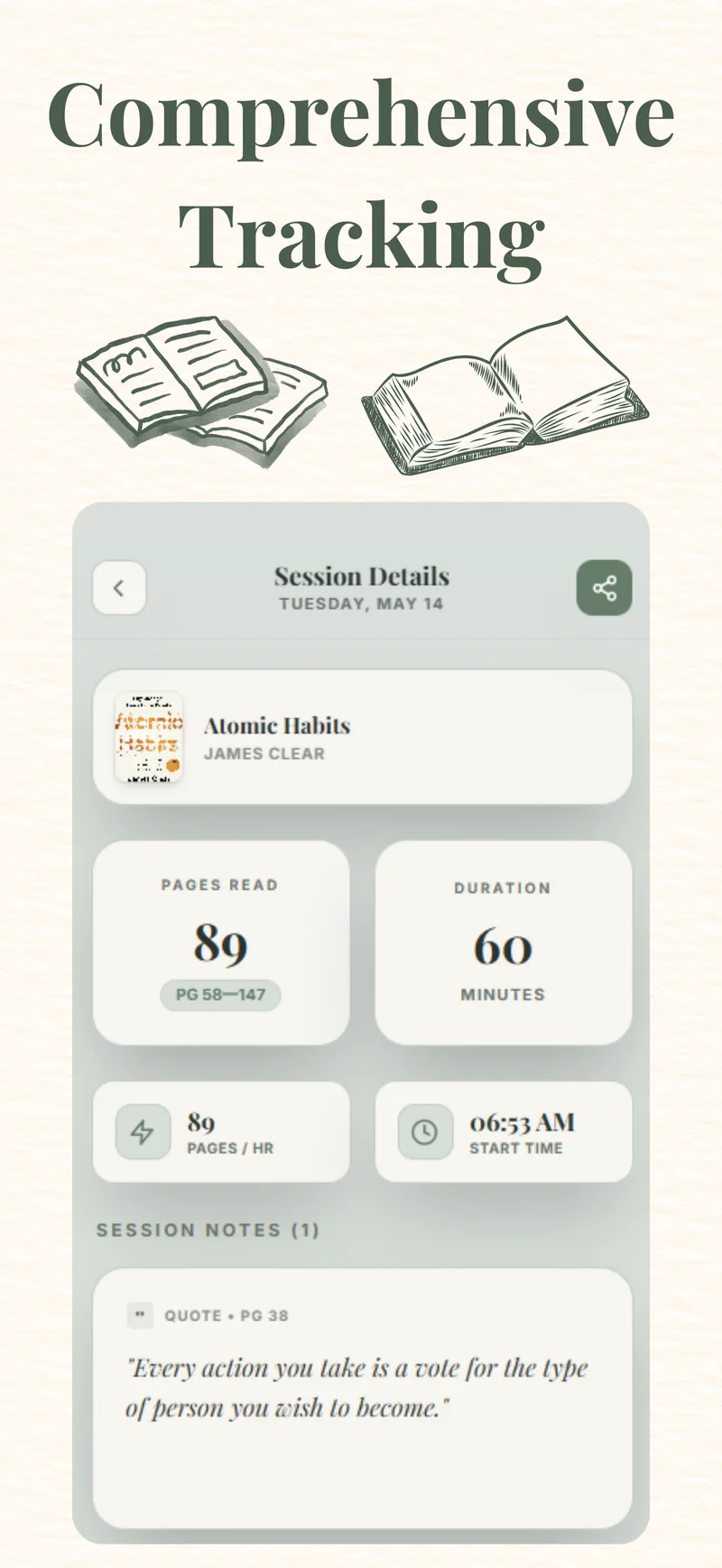
Time your reading sessions, keep a daily streak and see when you'll finish every book. Free on iPhone and Android.
Read More in 7 Days
One short email a day, one small habit that makes reading easier to keep up. Plus a printable 30-day streak tracker with your daily target on it.
- Day 1Start smaller than you think
- Day 2Tie reading to something you already do
- Day 3Close the gap between books
- Day 4Yes, audiobooks count
- Day 5Quit the book that's stopping you
- Day 6Never miss twice
- Day 7Look back, then set next month's target
- By Dec 31
- about 5 more books
- Every year
- 24 books