
The 100 Classics: How Many Have You Read?
One hundred books from four thousand years of literature — curated for genuine canon, not just the usual suspects: Homer and Murasaki, Austen and Achebe, Tolstoy and Toni Morrison. Tap every book you've finished, watch your score climb, and share it when you're done. Your progress saves in this browser automatically.
Most readers score between 10 and 25. Over 40 and you're in rare company. Over 70? We'd like to shake your hand.
Prefer paper? Download the printable checklist (PDF)Turn this list into a year
A hundred classics is a decade, not a year. Twenty-four of them is a year — roughly one a fortnight — and it is the version people actually finish. Start with the shortest, which are far shorter than their reputation.
The rules
- Shortest first. Momentum matters more than chronology.
- Abandoning one is allowed. A classic you hate at forty is still a classic you hate.
- Translations and abridgements count. A finished abridgement beats an unfinished doorstop.
- Audiobooks count, and suit the pre-20th-century ones especially well — most were written to be read aloud.
Why bother
Most classics are shorter than their reputation
The Great Gatsby is 180 pages. Of Mice and Men is 107. Animal Farm is 112. The intimidating length of the classics is mostly a handful of Russian novels doing the work of an entire reputation.
They are the shared reference points
Classics are the books other books are arguing with. Reading them makes everything written afterwards legible in a way that is difficult to get any other route.
School ruined them, and that is reversible
Most people met these books on a deadline, at fifteen, with an essay attached. Read at your own pace with nothing to prove, a surprising number turn out to be genuinely entertaining.
They are free
Nearly everything published before 1930 is in the public domain. Project Gutenberg and Standard Ebooks have most of this list legally and at no cost, and Standard Ebooks is the better-typeset of the two.
39 of these books are free to read. They're in the public domain, and Read free opens a carefully proofread ebook from Standard Ebooks, a volunteer nonprofit. For more, browse our public domain books.
The Ancients & Early Classicsto 1610
Four thousand years of storytelling before the novel even existed — epics, tragedies, and the first long fictions. These are the books every later book is quietly in conversation with.
The Rise of the Novel1700–1855
The novel grows up fast: castaways and satires, Gothic nightmares and drawing-room comedies, and the first books that feel like they were written about people you might actually know.
The Great Age of the Novel1855–1910
The half-century when the novel became the dominant art form on the planet — Russian epics, French realism, and the books that still top every 'greatest ever' poll.
Modernists & Between the Wars1910–1945
Literature breaks its own rules: stream of consciousness, fractured time, and ordinary days made monumental — alongside the era's great popular storytellers.
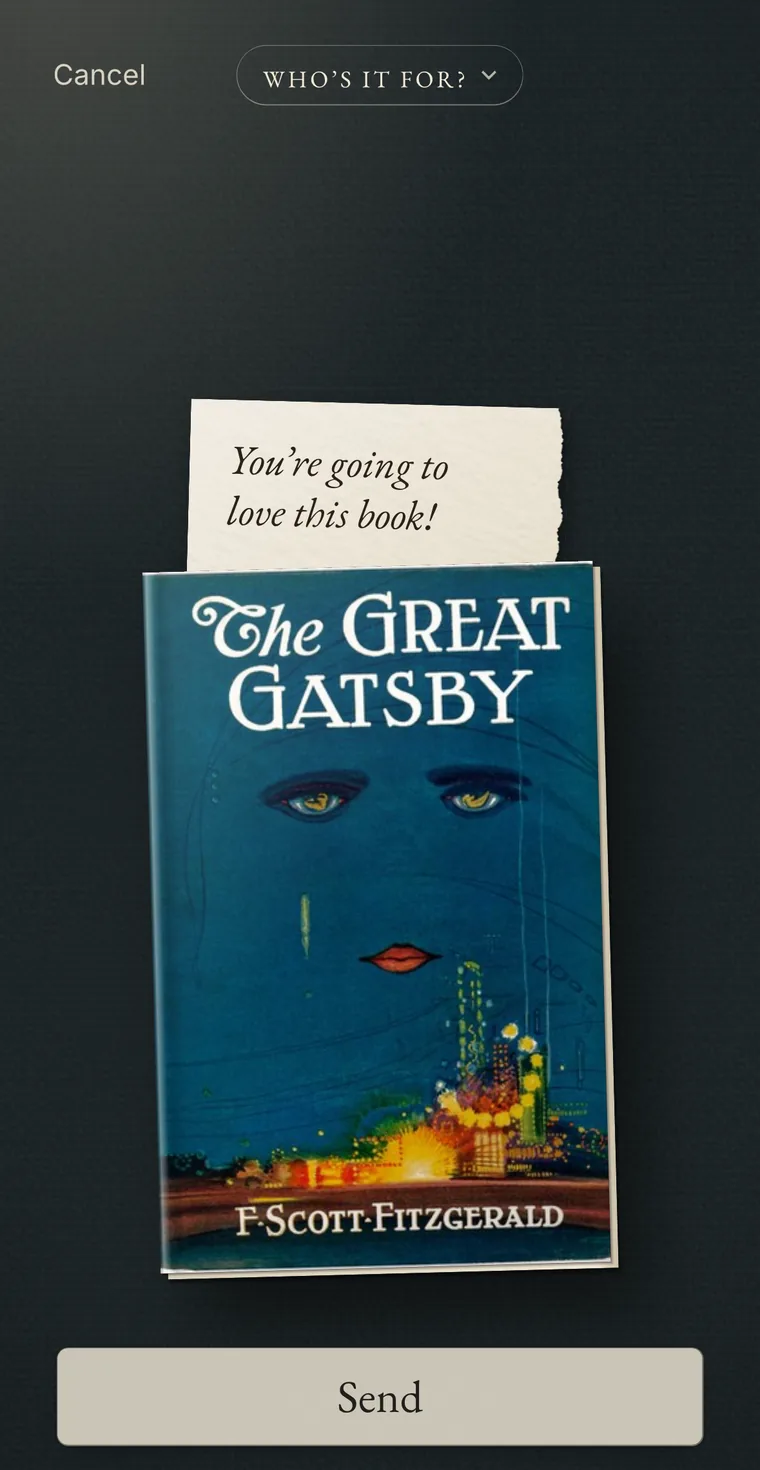
Checking boxes is fun. Tracking books is better.
Parch keeps your whole reading life (every book on this list, your streaks, notes and stats) in one beautiful, private app. And when a book here makes you think of someone, send it to them with a note, by text or email.
Postwar Classics1945–1980
The canon goes global: dystopias and diaries, magical realism from Colombia, protest and poetry from America, and the birth of modern fantasy and science fiction.
Contemporary Classics1980–present
The newest members of the canon — books recent enough that you remember their arrival, and good enough that your grandchildren will still be assigned them.
Your score: 0 of 100
Every reader starts at zero — pick the one that's been on your list the longest.
About this list
How were these 100 books chosen?
We aimed for genuine canon consensus across four thousand years and six continents — the books that appear again and again in critics' polls, university syllabi, and readers' hearts — while representing the whole canon honestly: Murasaki Shikibu and Chinua Achebe belong here just as surely as Dickens and Tolstoy.
How many classic books are there?
There's no official count. "Classic" isn't a fixed category; it means a book that has outlasted its moment and is still read, taught and argued about. Published canon lists run from a few dozen titles to several hundred, depending on who compiles them. A hundred is a useful core: enough to span four thousand years and six continents, small enough to actually finish.
What is the shortest classic on this list?
The Metamorphosis, at around 60 pages in most editions. The Little Prince, Heart of Darkness, Animal Farm and The Stranger are all close behind at roughly 90 to 140 pages, and The Great Gatsby is under 200. Page counts vary by edition, but any of these is a one- or two-sitting read.
Does my checklist progress save?
Yes — progress saves automatically in your browser with no account needed. Clear your browser data and it resets, so for a permanent record with dates, notes, and reading stats, track your books in the Parch app.
What counts as having read a book?
Your list, your rules — but we'd say: finished it in any format. Audiobooks absolutely count. Watching the adaptation, alas, does not.
Where should I start with classic literature?
With a short one. Animal Farm, Of Mice and Men, The Great Gatsby and The Stranger are all under 200 pages and all genuinely readable. Starting with War and Peace is how most classics challenges end in February.
Are classics free to read?
Most of them. Nearly everything published before 1930 is in the public domain in the US, and Project Gutenberg and Standard Ebooks both offer clean, free editions.
Is it cheating to listen to a classic as an audiobook?
No, and for anything written before about 1900 it is arguably closer to the intended experience — those books were routinely read aloud to a room. Shakespeare in particular is a script, not a novel.
More reading checklists
The 2026 Reading Journal Kit
Six printable pages to log, plan and celebrate your reading year. Enter your email and we'll send the PDF straight to your inbox.
- Reading log
- TBR planner
- Monthly tracker
- Ratings & reviews
- Reading bingo
- Year in books